gente
Aplicarán cuarta dosis contra COVID-19 en Jalisco

El refuerzo estará disponible tanto en la ZMG como en en el interior del estado. Foto: SSJ.
Redacción.- A partir del 19 de abril, en Jalisco podrán acudir por un nuevo refuerzo (cuarta dosis en el caso de esquema inicial de 2 dosis) de la vacuna contra COVID-19 las personas mayores de 60 años y el personal de salud, tanto de instituciones públicas como privadas que cuenten con una dosis de refuerzo anterior.
De forma coordinada, las autoridades federales -encabezadas por el Operativo Correcaminos y la Secretaría de Bienestar-, y la Secretaría de Salud Jalisco (SSJ) dieron aval para seguir la recomendación de proteger a los grupos prioritarios con la aplicación de un nuevo refuerzo, para lo cual sólo es necesario que hayan transcurrido cuatro meses desde la última aplicación.
Las personas que pertenezcan a los grupos convocados y cumplan el criterio de tiempo pueden acudir por la cuarta aplicación del biológico al macromódulo instalado en el Auditorio Benito Juárez en Zapopan, o a las unidades de salud con red de frío en todo el estado sin cita; así como a las unidades médicas de instituciones de seguridad social y puestos de vacunación.
La cuarta dosis (nuevo refuerzo) estará disponible en las sedes metropolitanas y los 125 municipios del estado, se puede consultar en https://coronavirus.jalisco.gob.mx/ruta-de-la-vacunacion/ o pedir información en el Call Center de la SSJ al número telefónico 33 3823 3220.
Verbena Jamaica del Pasado benefits 20 sick Ajijic residents
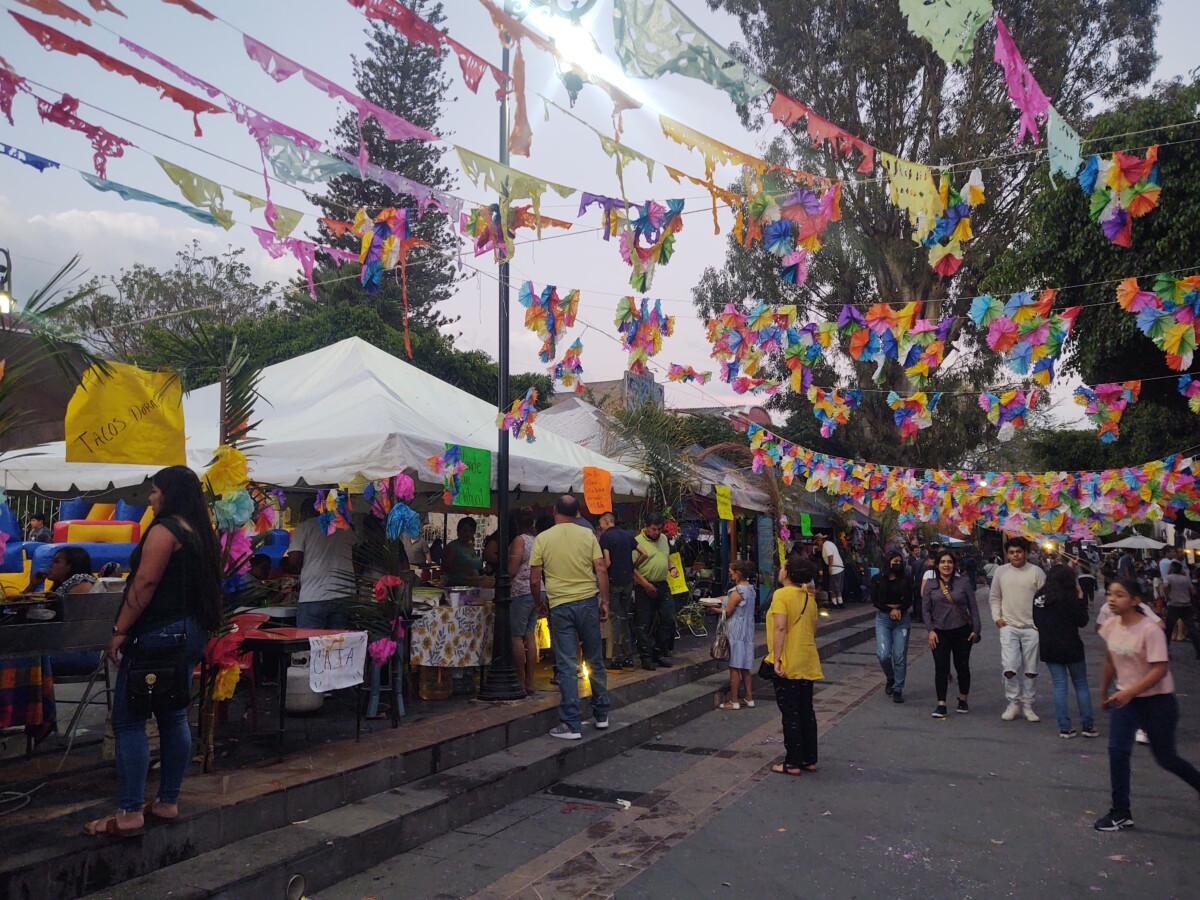
The stalls, decorated with palm leaves, were placed on the main square. Photo: Sofía Medeles.
Sofía Medeles (Ajijic).- The purpose of this year’s Verbena Jamaica del Pasado was to support Manos Solidarias, a group that helps sick people in Ajijic. A total of 20 families of sick people benefited from the kermesse (community fundraiser) held on April 10.
Verbena Jamaica del Pasado is a local event that goes back more than 120 years, where typical Mexican games are played, traditional food is shared or sold,such as tacos, sopes, enchiladas, pozole, tamales,, all prepared by Mexican families who have done so for many generations.
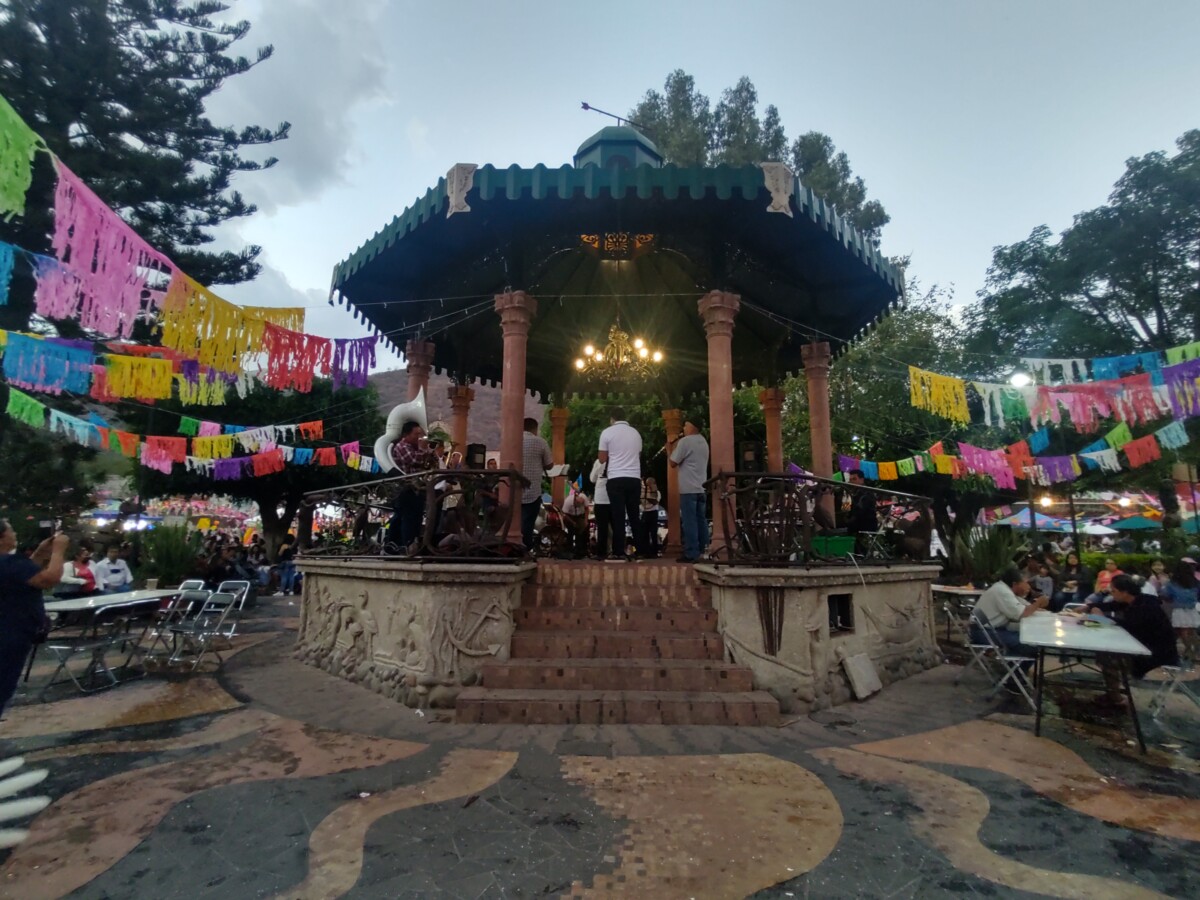
The kiosk was also decorated with papel picado. Photo: Sofía Medeles.
Although the group Pasión de Cristo, which is in charge of the organization of the popular festival, participated with two food and drink stalls, most of the stalls were from relatives of people with illnesses that require high-cost treatments and other medical expenses.
In this edition the verbena extended much longer than usual, having food, drinks, desserts, confetti eggs, and lottery from 8:00 in the morning until 10:00 at night. In some of the stands they had to look for alternative food to sell to cover the longer schedule. The people who sold menudo, for example, at the end, sold roasted meat.
The papaqui, a traditional game that consists of throwing confetti eggs among the attendees, could not be performed, since the musical group did not know the song that is played during this game. Another tradition, the «light of the past,» in which the electric lights are turned off and candles are burned in lamps made of crepe paper to resemble stained glass, was also omitted since the short drizzle that occurred wet the lamps enough to make them unusable.
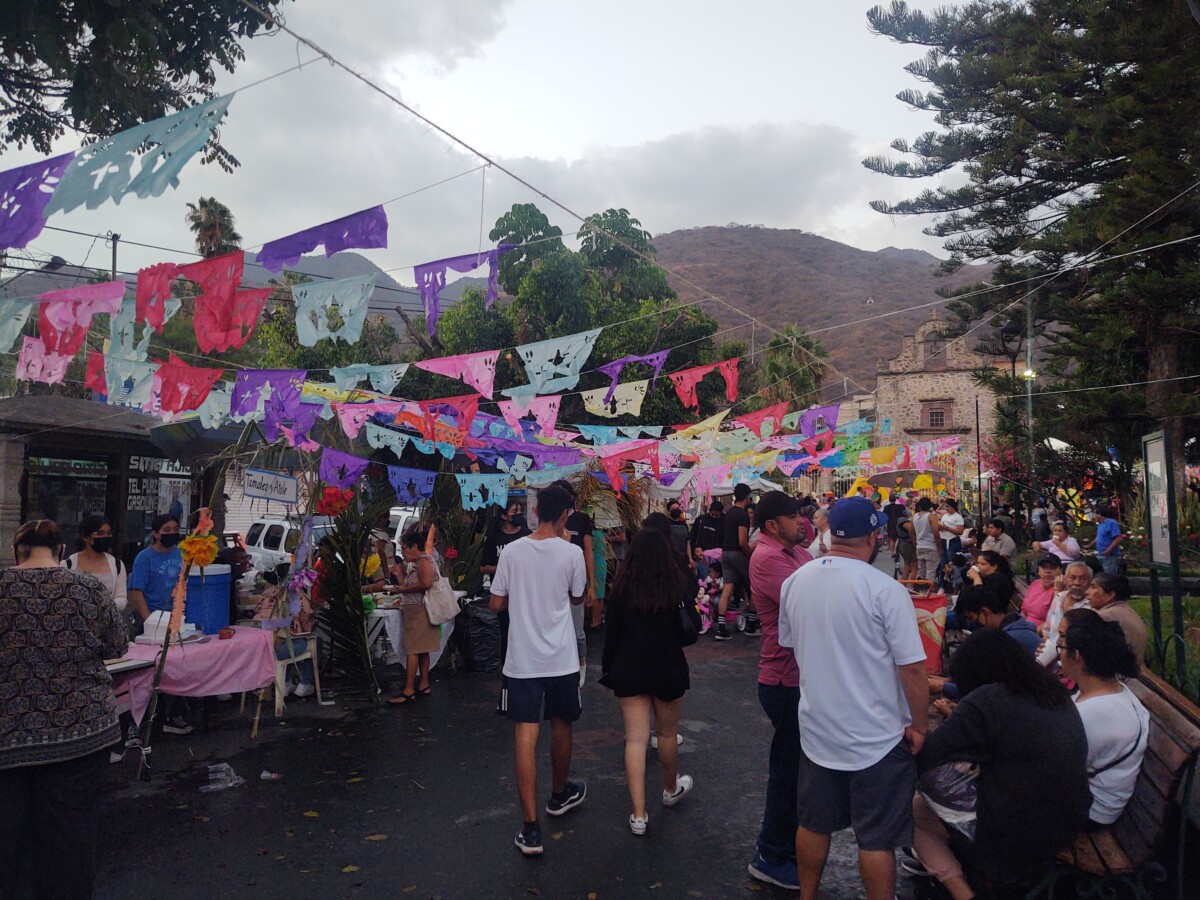
In spite of the rain, many people remained in the plaza, enjoying the music and the food booths. Photo: Sofía Medeles.
One of the members of Manos Solidarias commented that a donation box was also placed in the main square, in which a little more than four thousand pesos were collected and which was originally going to be distributed among the 20 families that participated. However, both the participants and the group opted to give that money to sick people who could not participate: Sara Enciso, Carlos Pérez Gudiño, Niño Santacruz and Jorge Vega.
Finally, Manos Solidarias stated that they hope to organize another event soon in order to continue supporting the sick and, for his part, Eduardo Ramos Cordero, general director of Pasión de Cristo, supported the idea.
Both groups thanked the contribution of the inhabitants of Ajijic, the tourists who joined in and the visitors from other towns for supporting the cause.
Translated by Sandy Britton
Palm Sunday commemorations returned throughout Lakeside
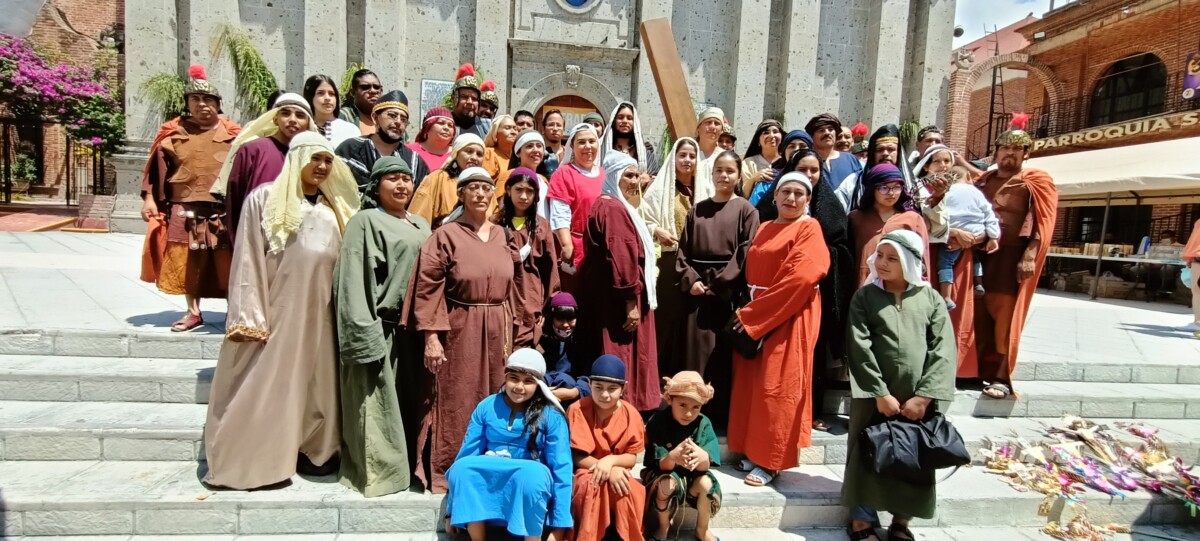
Cast of the Passion of Christ in the atrium of the parish of St. Francis of Assisi, which this year will have 60 interpreters, plus staff to assist them. The main roles are those of Jesus, Mary, Herod, Pontius Pilate, Judas, and the Priests of the Sanhedrin. Photo: Jazmín Stengel.
Jazmín Stengel.- After two years of not appearing due to the pandemic, the cast of the Chapala 2022 Stations of the Cross made its first public appearance with the re-enactment of the «Triumphal Entry of Jesus into Jerusalem», in the parish of San Francisco de Asís, in the municipal capital of Chapala.
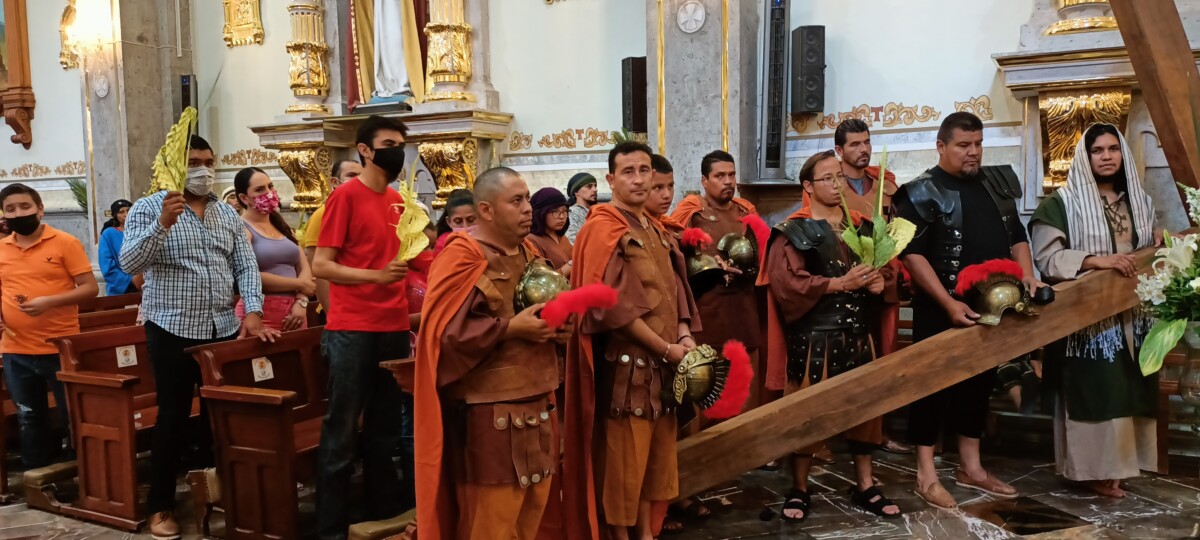
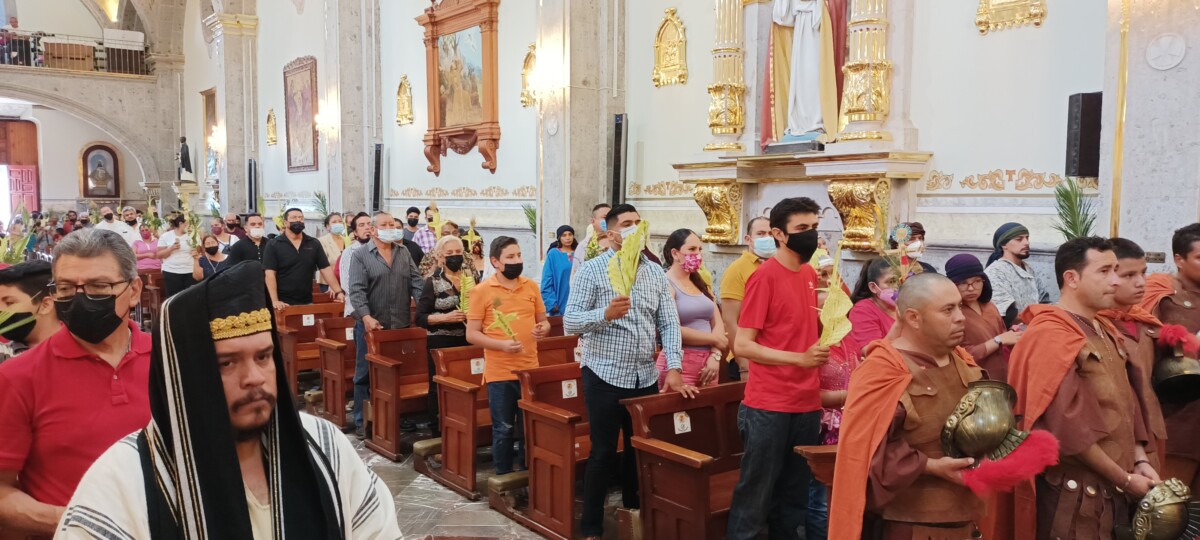
The cast of Viacrucis Chapala 2022, was presented for the first time during ‘The Triumphal Entry of Jesus into Jerusalem’, in the parish of St. Francis of Assisi on Palm Sunday. Photo: Jazmín Stengel.
About 300 people attended the 1:30 pm mass on Palm Sunday to bless their palm branches during the Eucharist, where Joel Salvador Torres Arrayga, 25 years old, stood out in the role of Jesus.
Sixty people form the cast that accompanies Jesus Christ throughout the representation of the trial and his journey to the crucifixion. Joel Salvador played Jesus, Athziri Guadalupe Martínez Real was the Virgin Mary, José Roberto Michel Mendoza was Pontius Pilate and in the role of Herod, Ramiro Moreno López.
The palm branches to be blessed during Palm Sunday, mostly made of wax palm and wheat, were accompanied by laurel and rosemary. Photo: Jazmín Stengel.
Jesús Alfonso Basulto Anaya participated as Judas, while Carlos Aguayo Ramírez and Jorge Alfonso Villegas López were the priests of the Sanhedrin. The play will be presented on Good Friday, April 15, starting at 9:00 a.m. in the parish atrium.
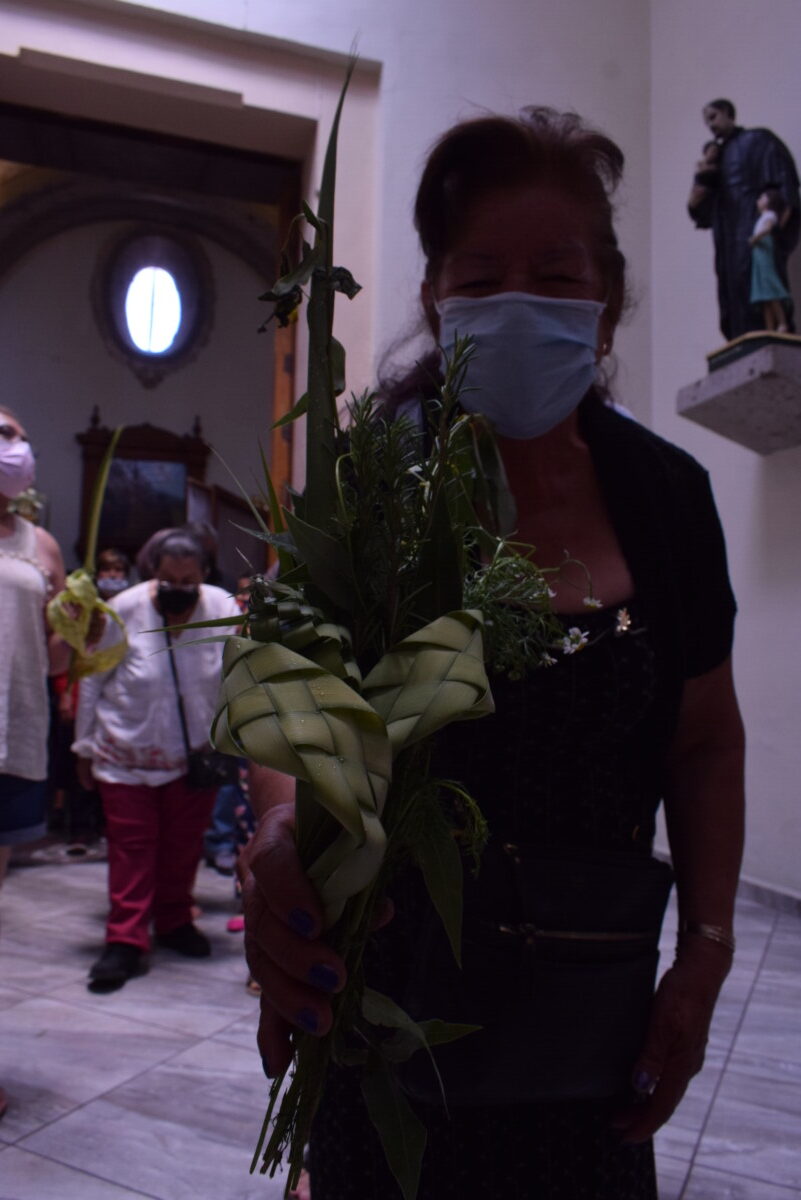
Parishioner during Palm Sunday service Photo: Jazmín Stengel.
The Palm Sunday celebration took place in all the masses starting at 7:00 am in the neighborhoods of Guadalupe, Tepehua, Lourdes and La Purisima, plus the parish of San Francisco de Asis, in whose precincts they were able to gather from 100 to 300 people per mass, according to one of the collaborators of the parish temple.
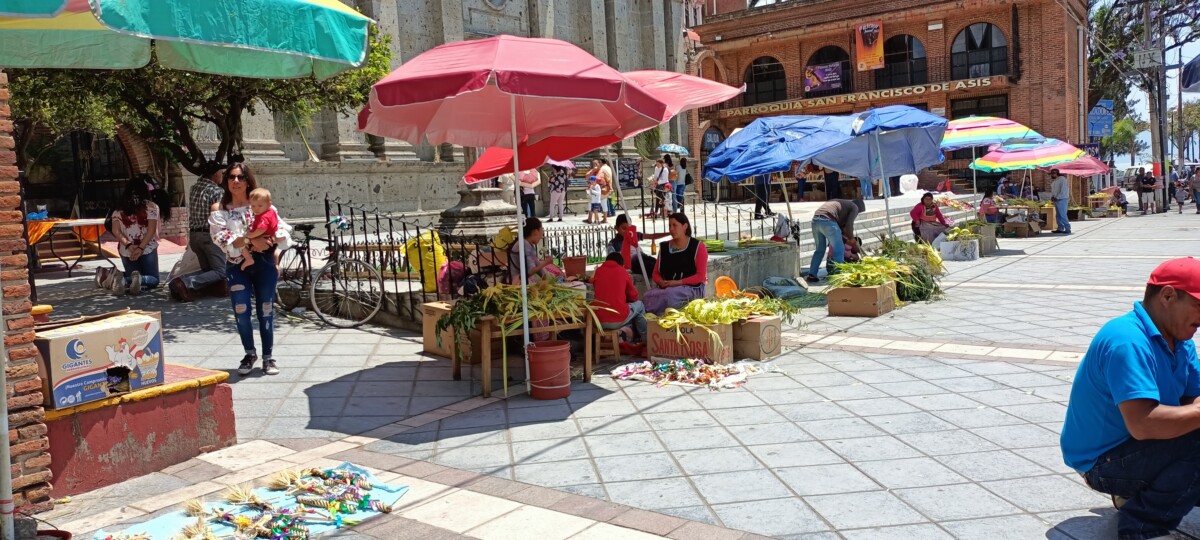
Outside the parish church of San Francisco de Asís, six stands from Michoacán were set up selling bouquets made of wax palms and wheat. Photo: Jazmín Stengel.
During the mass at 12:00 and 1:30 in the afternoon, in the parish of St. Francis of Asis there were more than three hundred parishioners present.

Cast of Roman soldiers
Hundreds of palm branches, accompanied by laurel and rosemary were raised to receive God’s blessing from the priests in charge of the Eucharistic celebration, highlighting the presence of children and young people who alone or in the company of their families attended the ceremony. There were also about six stalls with wax or wheat palms made by people from Michoacán.
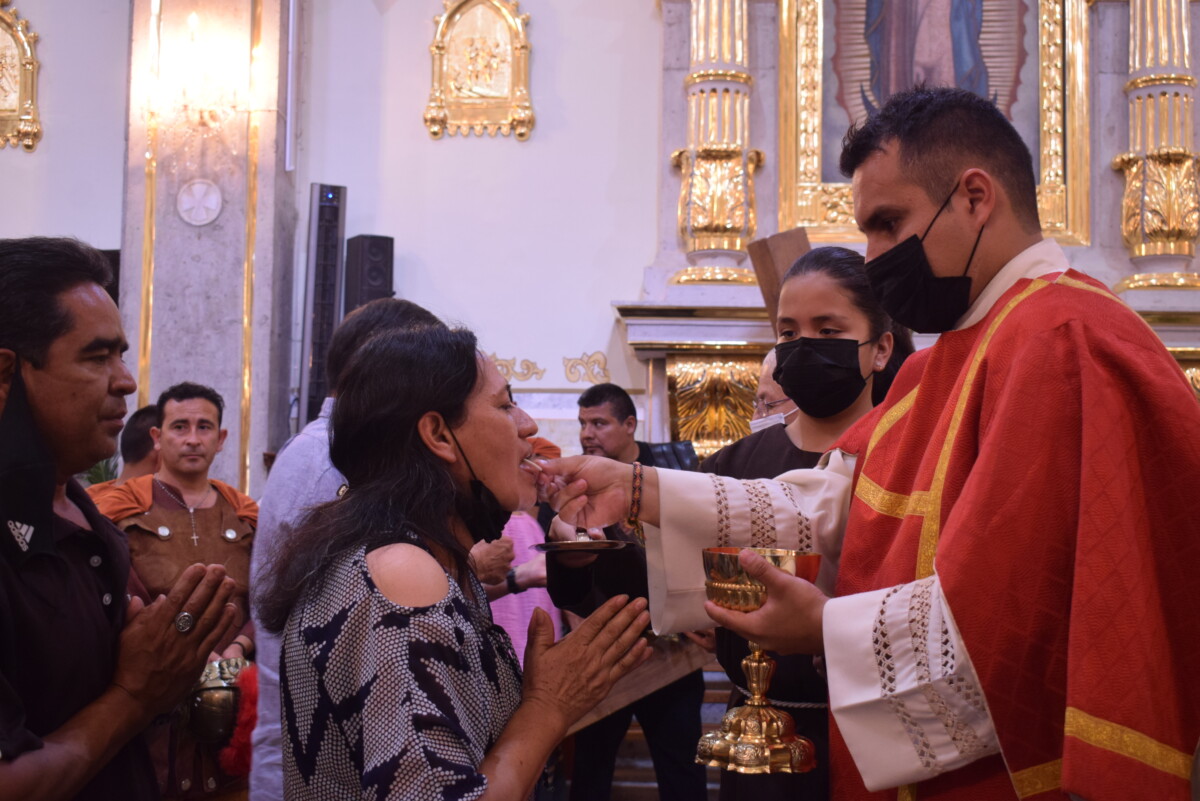
Parishioner receiving the Eucharist during Palm Sunday
The type of palm is irrelevant, its spiritual meaning is based on a symbol of peace with which Jesus was received in Jerusalem. Today, the palms are blessed on Palm Sunday and placed on the altar throughout the year, then burned by the church to use their ashes during the next year’s Ash Wednesday.
Translated by Nita Rudy
Ten percent of Chapala’s voters participate in the presidential recall referendum
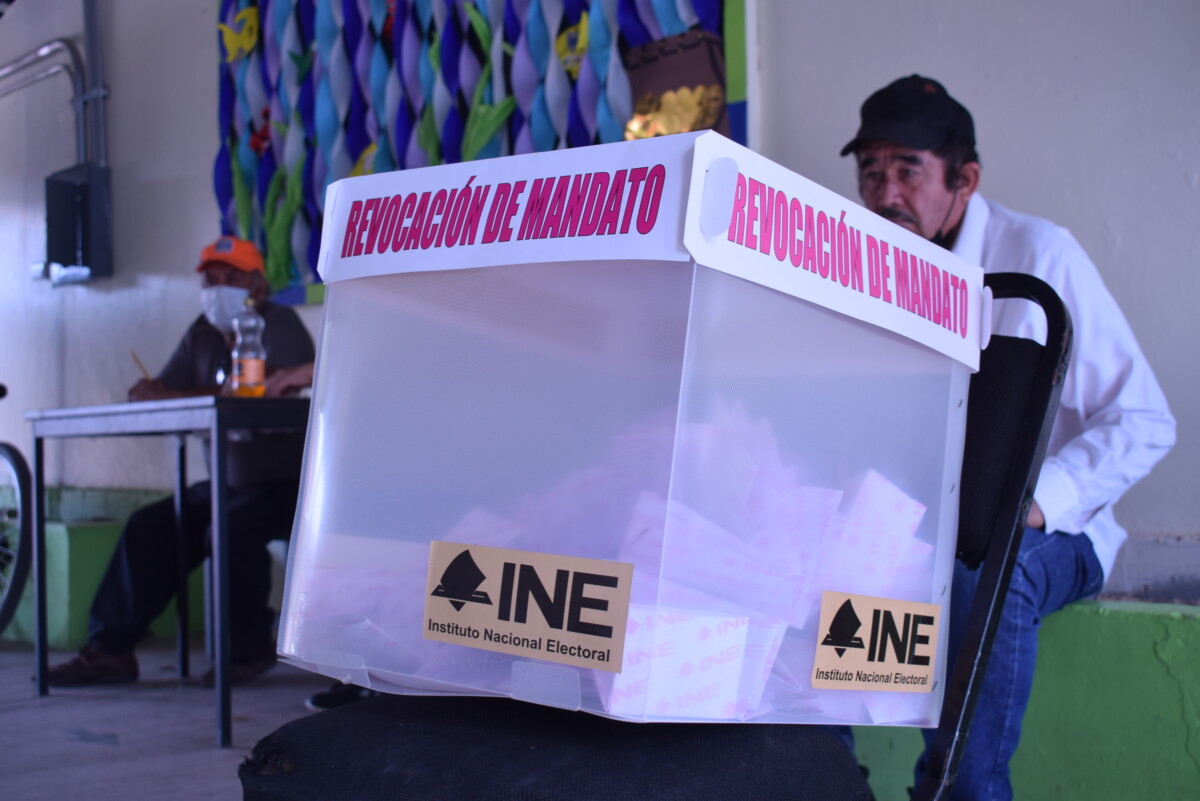
Citizen depositing their ballot. A total of 3,870 votes were collected in Chapala. Photo: Jazmín Stengel.
Jazmín Stengel (Chapala).- Ten percent of registered voters in Chapala participated in the recall initiative to revoke the mandate of the President of the Republic, Andrés Manuel López Obrador (AMLO).
Presidents of polling stations assured that the low turnout was due to misinformation among the community. In the democratic exercise held on Sunday, April 103, 870 Chapala residents participated out of the 38,306 registered on the National Electoral Institute’s (INE) nominal list, or 10.1 percent.
Of the total votes cast, 3,515 believed AMLO should continue to be the president of Mexico, while 303 wanted his mandate revoked due to loss of confidence and 52 canceled their vote, according to the figures of the Electoral and Citizen Participation Institute of Jalisco (IEPC).
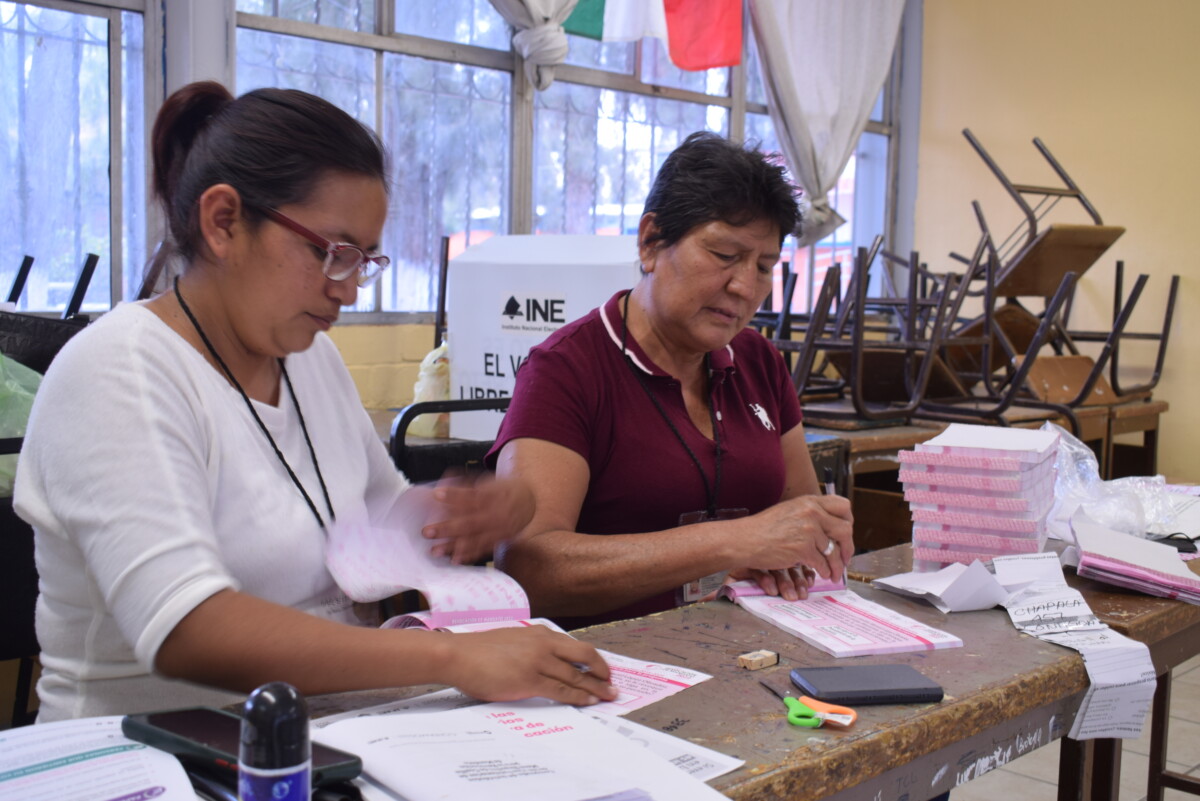
The ballot boxes at the Secundaría Técnica during the preliminary count. Photo: Jazmín Stengel.
A canceled vote may be a ballot that is marked unclearly but it also can be considered a null vote, a popular method to show dissatisfaction with either ballot choice.
Many interested in voting were unable to do so because no special polling place was installed in the entire municipality. The closest one was in the main plaza of Jocotepec, as it is the head of the 17 th electoral district. A special polling place is needed when people are outside of their normal polling area. With the election occurring during Easter week many voters were not in their voting districts.
The municipal seat of Chapala had five poll locations with two voting boxes each where 1,355 opinions were collected, of which 1,263 were in favor of the president remaining in office, 80 that he be recalled and 12 people annulled their vote.
The delegation of Ajijic obtained 91 votes in favor of the recall of the mandate. However, 859 preferred that Andres Manuel continue as president, and 19 people canceled their vote.
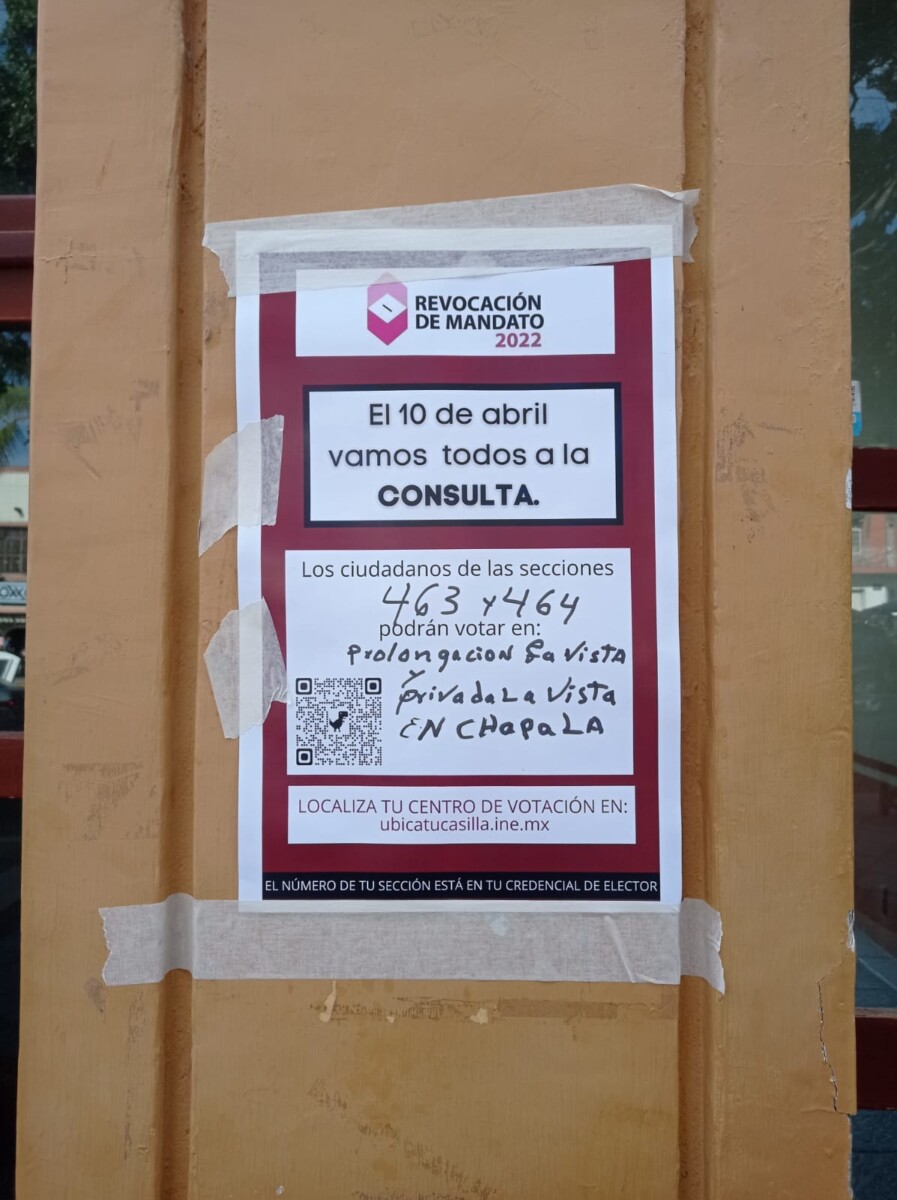
The relocation of some polling places caused confusion among the population. This is what the lists that helped participants to locate their polling place looked like. Photo: Arturo Ortega.
There were 908 participants in Atotonilquillo; 852 of them in favor of López Obrador continuing to govern, 43 against and 13 canceled their vote. Being the farthest delegation from the municipal capital, it only had two double-box polling places.
In San Antonio Tlayacapan, with one voting center at the Cuauhtémoc Federal Elementary School at the corner of the main plaza, a total of 405 votes were cast, 70 of them in favor of the recall and 330 for AMLO’s continuation; five canceled their vote.
In Santa Cruz de la Soledad, the total number was 232 participants, 18 in favor of the presidential recall and 211 against. San Nicolás de Ibarra did not have a polling center and was included in the polls that were installed in the neighboring town of Santa Cruz de la Soledad.
«Due to budget cuts», the number of polling places were reduced, and several sections were combined, explained Luis Orozco, general coordinator for the Movimiento de Regeneración Nacional (Morena). In addition, the precincts marked with the numbers 460, 461, 464, 465, 471 and 473 do not appear in the list of published results, as of the closing of this edition.
Translated by Nita Rudy
Chapala president announces project to enhance Ajijic tourism
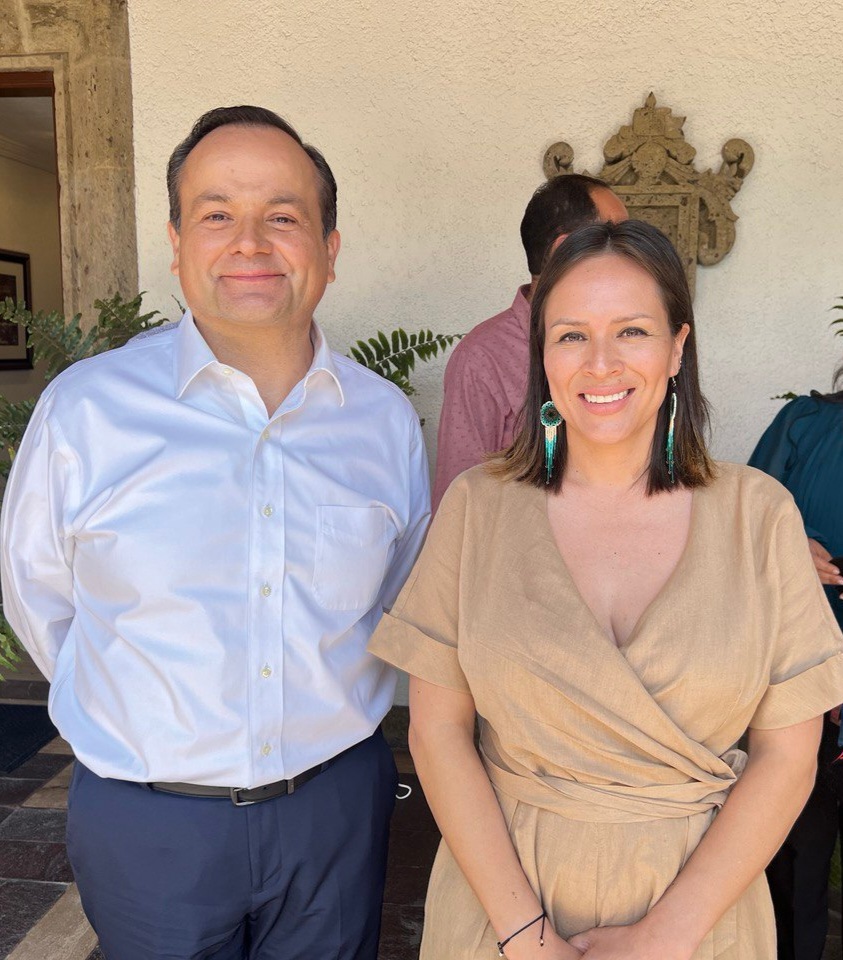
The president of Chapala, Alejandro de Jesús Aguirre Curiel, and the secretary of tourism of Jalisco, Claudia Vanessa Pérez Lamas
The president of Chapala, Alejandro de Jesús Aguirre Curiel, announced improvements for the Magic Town of Ajijic and the municipal capital to better accommodate tourists. The initiative is part of the project “Model of Magic Towns of Jalisco.”
Aguirre Curiel shared details of the improvements to infrastructure and tourism on social media. «The four elements of the project will create better conditions to receive visitors and show off the beauty of our Magic Town, Ajijic. The four areas are: study and improvement of circulation, creation of the position of tourist agent; study and improvement of the towns’ image; and waste management,» he said.
The president emphasized that the objective is to improve the quality of life both for people who are residents of the magic Town and for visitors. He states that «for Ajijic and for Chapala this news means a lot, because it strengthens economic and tourism growth, without losing the traditions and culture that identify us».
During the press conference held at Casa Jalisco on April 11, the first investment of 20 million pesos (about US$1 million) was announced for the start-up of the magic Towns Model in the nine magic towns of the state; during the year, for a total investment of 359.7 million pesos (about US$18 million).
Finally, Aguirre Curiel recognized the role of Governor Enrique Alfaro Ramírez in getting Ajijic designated a magic town, highlighting its traditions and excellent climate as some of its main attractions while acknowledging the influence of the residents of the expatriate community.
Translated by Elisabeth Shields
Suspect found guilty and was sentenced for sexually abusing his partner’s daughter
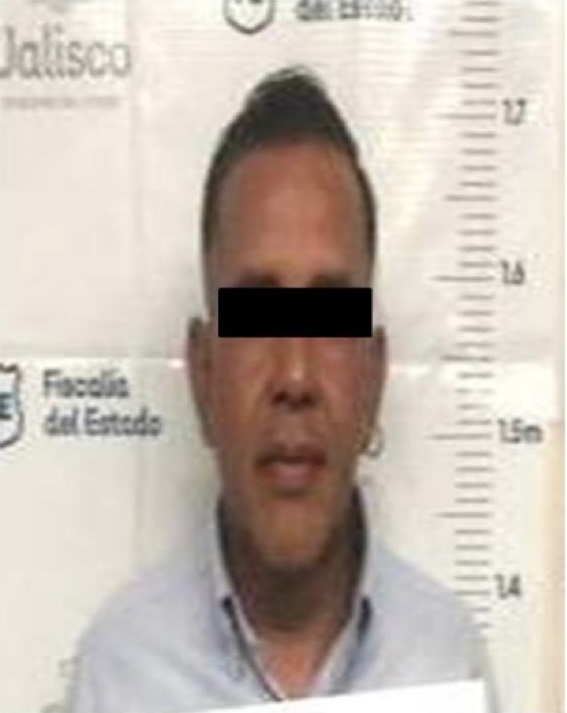
Abraham M., was recently arrested by the Investigative Police; he has already been sentenced to trial. Photo: Prosecutor’s Office.
Staff.- Abraham M., was indicted on charges of sexually abusing the minor daughter of his partner in the Sabinos subdivision in the municipality of Ixtlahuacán de los Membrillos.
The subject allegedly threatened his victim so that she would not tell what happened, telling her that he would murder her mother. For this reason, the Public Prosecutor’s Office requested the official pre-trial detention against the individual, as a precautionary measure and for the victim’s protection. He was held for a year awaiting trial. The investigation began after a criminal complaint was filed on October 17, 2019.
The victim was assaulted at approximately10: 30PM when she was sleeping in the living room of her home in the municipality of Ixtlahuacán.
After assaulting the victim, Abraham M, who was the partner of the victim’s mother, warned her ot to tell what had happened, otherwise he would murder her mother. Out of fear, the minor kept silent for a while; however, she told her mother and they filed a criminal complaint.
The Regional Prosecutor’s Office of District V carried out the investigation as a gender crime and found enough evidence of criminal child sexual abuse that an arrest warrant was requested against Abraham M.
The subject was recently captured by members of the Investigation Police, who served the warrant and presented him before the Control Judge who, considering the evidence provided by the Public Prosecutor’s Office to be ample, sent him to trial.
Translated by Patrick O’Heffernan
Mayor announces improvements and funding for Ajijic and Chapala
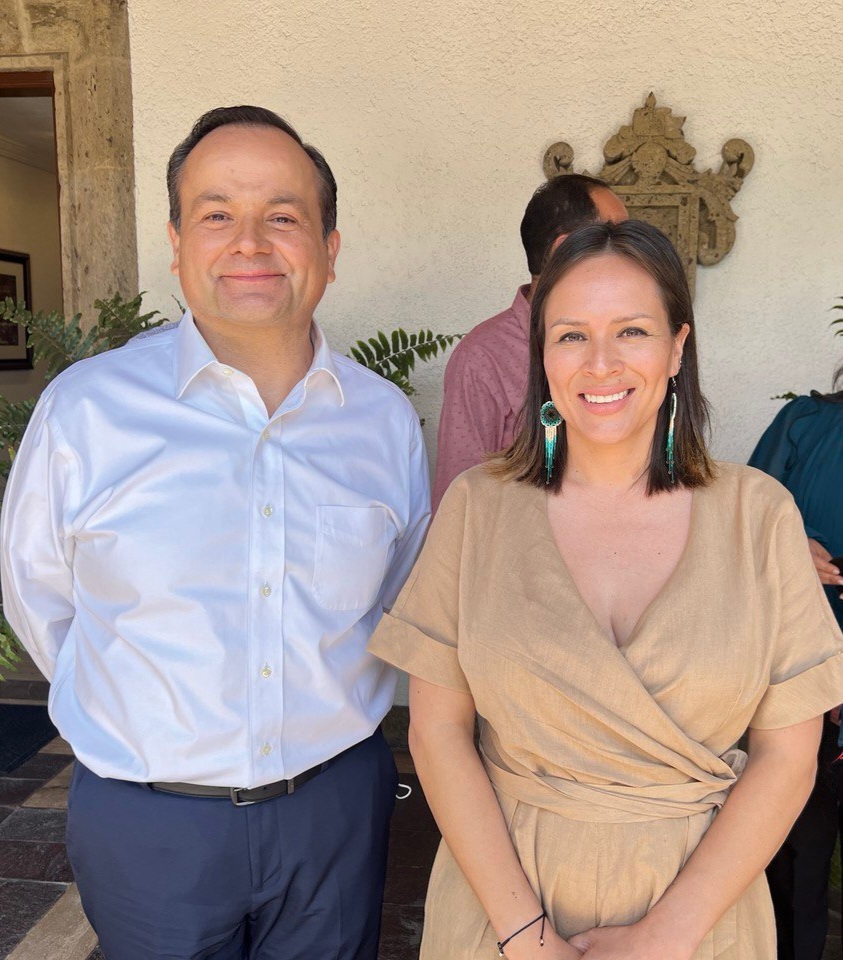
The mayor of Chapala (right) accompanied with the Jalisco Secretary of Tourism.
Editor.- Chapala Mayor Alejandro de Jesús Aguirre Curiel announced the projects to improve the Pueblo Mágico aspects of Ajijic and the tourist areas of Chapala in his presentation of the Model of Magic Towns of Jalisco.
Aguirre Curiel shared details of the project and the funds to improve infrastructure and tourism on social media.
«This project consists of four thrusts that will allow our Pueblo Mágico, Ajijic, to better receive visitors and show off its beauty: Analysis and improvement of mobility in the town; Establishing a Tourist Agent; Analysis and improvement of its visual presentation; and waste management».
The mayor emphasized that the objective is to improve the quality of life of the people who live in Ajijic and the people who visit it, so he considered this an important policy «for Ajijic and for Chapala this news means a lot, because it strengthens the economic and touristic growth of our municipality, without losing the traditions and culture that identify us».
During the press conference held at Casa Jalisco on April 11, a first investment of 20 million pesos was announced for the start-up of the Magical Towns Model in the nine towns of the state that have this distinction.
Finally, Alejandro Aguirre, recognized the influence of Governor Enrique Alfaro Ramírez in the designation of Ajijic a Pueblo Mágico, highlighting its traditions and excellent climate as some of its main attractions, without forgetting the influence of the retired residents of the Expat community.
Translated by Patrick O’Heffernan
The ‘anti-fencing’ movement will clear the beaches of the rebuilt fences
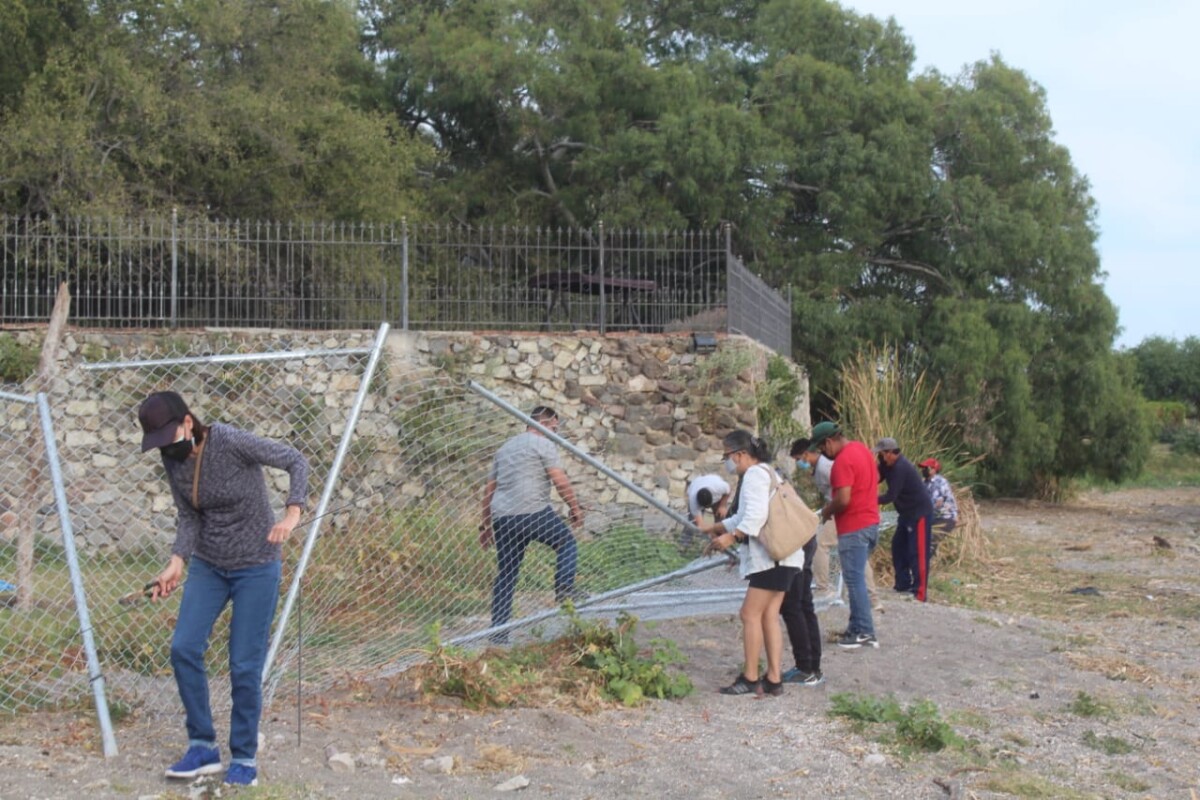
Chain-link fence located near the pumping plant being removed for the second time. Photo: Sofía Medeles.
Sofía Medeles (Ajijic).- Pueblos Unidos de la Ribera activists removed a chain-link fence for the second time they claim had been placed in federal territory of Lake Chapala.
The action took place last Friday, April 8, in the area that had been allegedly illegally fenced near the re-pumping plant of the Municipal Potable Water and Sewage System (SIMAPA), to the east of the town.
On this occasion, not only was the fence removed, but it was cut up, and the activists used hammers to destroy the bases where the posts are placed, so that the fence could not be put up again, as happened last time. Although the land owners tried to intimidate them by taking video, the activists were not deterred.
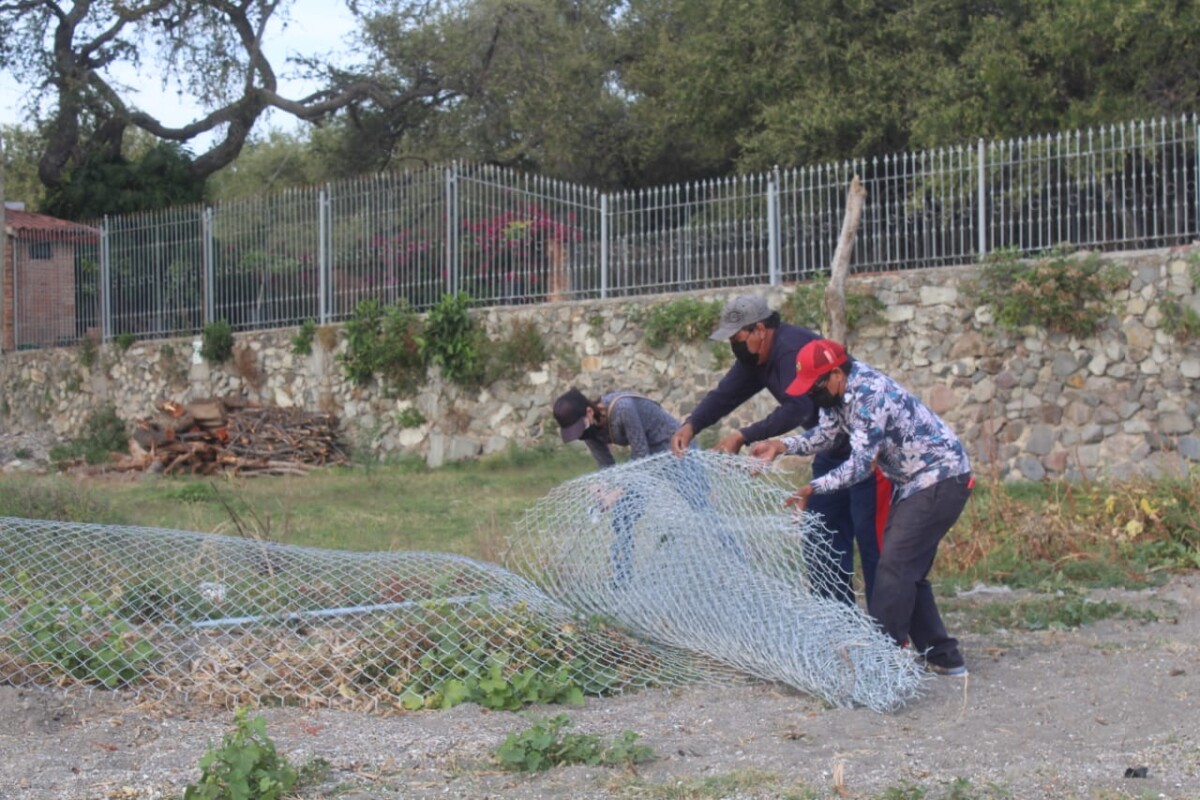
In addition to removing the fence, the bases where the pipes are placed were also cut and covered to prevent it from being put up again. Photo: Sofía Medeles.
At the end of the meeting, there was talk of returning to the beach in the area known as «Tío Domingo», where in August and September last year, at least seven fences were removed. Of all these, five have been rebuilt, and two of the lands allegedly illegally occupied have been planted with crops to justify their takeover by the adjacent landowners. Two of the alleged illegal fences have been rebuilt twice.
Also, two more disputed fences were recently removed to the east of Ajijic, at the end of Donato Guerra Street; in one of these, the owners chose to remove the entire fence and, in the other, they raised it again, however, it was removed again.
The meetings of the group to act against this type of invasion will be announced through social networks. Members of the «anti-rejas» movement say that the participation of the Ajijitecos and other interested parties is important, since it is an issue of interest for all the residents of the area around the lake.
Translated by Patrick O’Heffernan
Less than ten percent of District 17 voters participated in the recall election
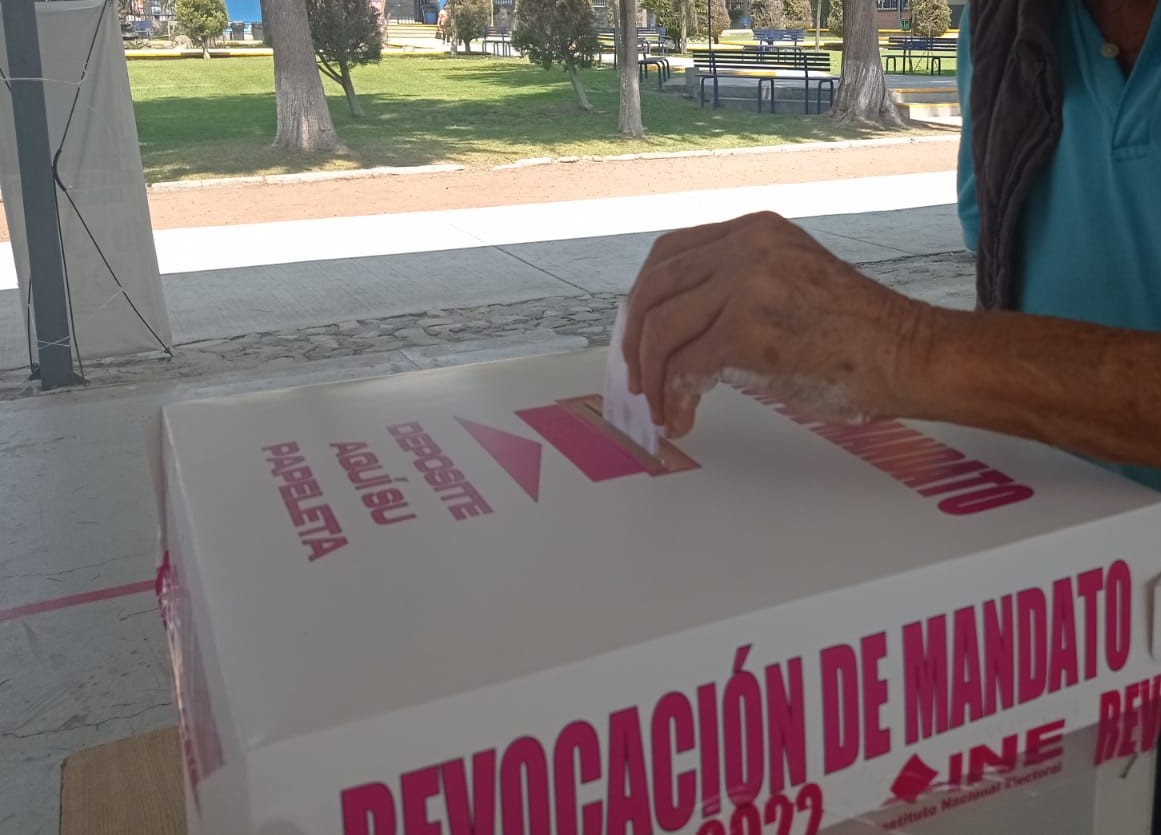
Only 27,168 cast their vote in the lake area.
Héctor Ruiz Mejía.- Only 9.97 percent of the electorate in District 17 participated in Sunday’s vote on the Revocation of Mandate on Andrés Manuel López Obrador (AMLO).
Of the 272,259 people who were expected to go to the polls on April 10 in the 15 municipalities that make up the district, only 27,168 cast their vote. Of these, 25,270 voted in favor of AMLO’s continuation as president, 1,548 voted to revoke his mandate and 350 left their ballot blank.
Between Chapala and Jocotepec, seven thousand two votes were cast, of which six thousand 351 were in favor of AMLO, 558 against him, and 100 were null votes.
Nationally, voter participation was also low, according to INE only between 17 and 18.2 percent of those registered on the nominal list cast their vote; Jalisco registered 9.06 percent, one of the states with the lowest participation. The election had no impact because, it required at 40% of the current electoral roll.
Translated by Patrick O’Heffernan
Warning of forgery of deeds in Chapala
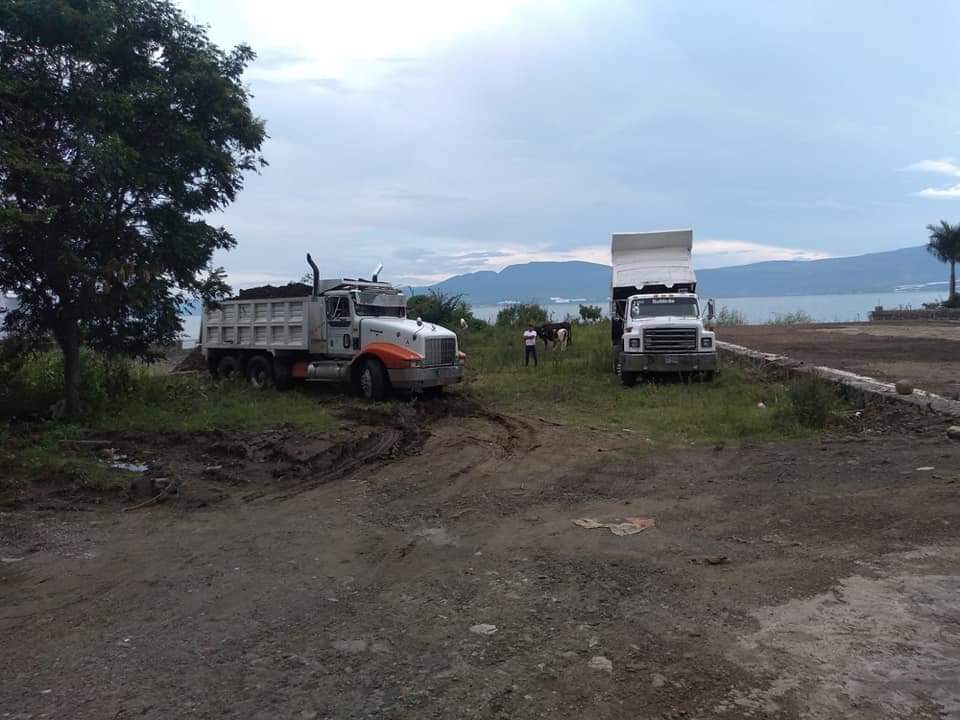
Trucks in the Bajío area, west of Ajijic. File 2021.
Editor. White-collar criminals have set their sights on Chapala to seize land in federal zones, using false deeds and corrupt notaries who use their positions to issue forged documents with which they try to take over public spaces.
The Government of Chapala, the Association of Notaries Public of the State of Jalisco and the State Government have called on the population to oppose bad practices of public notaries, after investigating that, in complicity with private individuals, they have falsified documents to take possession of land in federal zones.
The municipal authorities, in coordination with the state authorities, have undertaken a strategy to stop illegal acts by notaries and individuals who try to take possession of land in Chapala. The Dirección General de Delitos Patrimoniales y Financieros de la Fiscalía de Jalisco, has opened investigations into irregularities committed in the municipality.
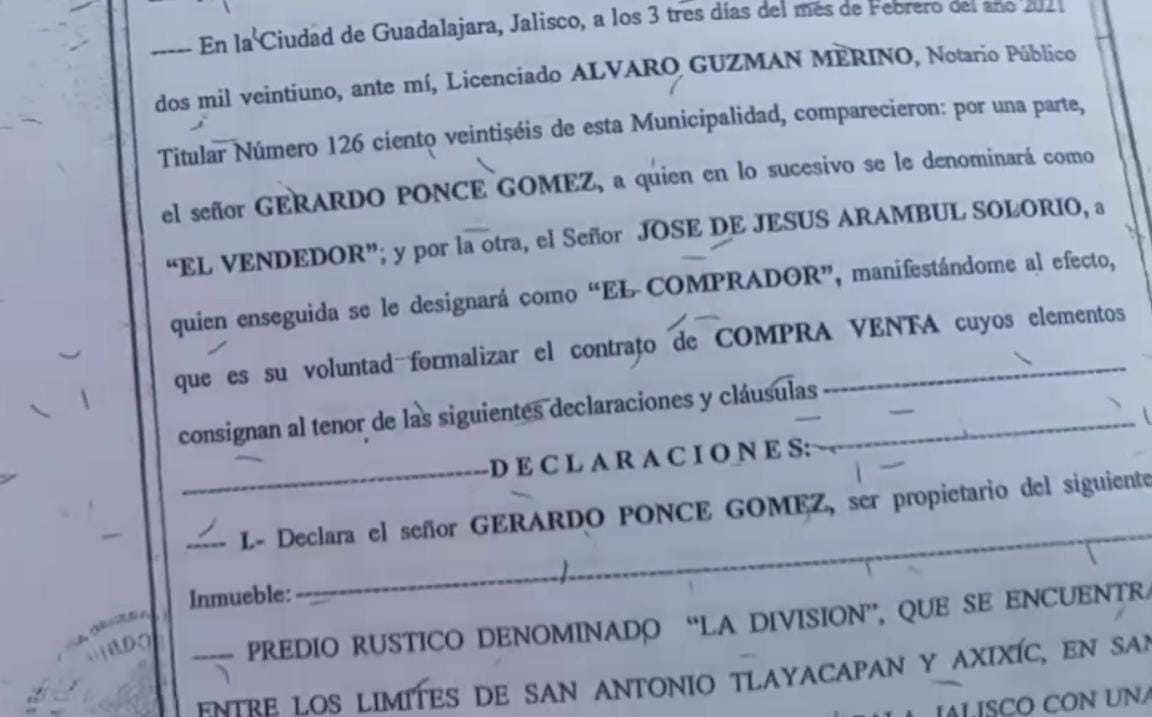
Part of a deed, which Jaime Natera López, President of the College of Notaries of Jalisco, qualified as false as it was signed by a notary who was suspended and out of his jurisdiction.
The Notary Association of Jalisco asked for regulations to insure that those who want to acquire a property, do so based on the law, and condemning people they labeled as «loafers», who want to take possession of land illegally. The Association vowed it would not protect any person who tries to do illegal acts.
«We are not going to overrule anyone, but we must consider the Registrar who participates in the appraisals and the public registry of property. I am totally convinced that some of these (fake) deeds can give legal certainty,» said Jaime Natera Lopez, President of the College of Notaries of Jalisco in a media interview.
For the last ten years the problem of invasions in the hills and beach areas of Lake Chapala has been growing at an accelerated rate, without any authority trying to put a stop to the invasions. in many cases illegal the takeovers of property have been facilitated by corruption by private individuals and notaries public.
Among the public notaries that are endorsed as legitimate in Lakeside are: Jorge Chávez, Sergio Macías, Juan Carlos López, Sergio Macías (father), Luis Enrique Ramos, Juan José Rodríguez, Adriana Villaseñor, as well as notaries public from La Barca, Ocotlán, Ayotlán, Tototlán and Atotonilco, on the condition that they are present. The misuse of notarial procedure is punishable with two to six years of imprisonment.
Translated by Patrick O’Heffernan
© 2016. Todos los derechos reservados. Semanario de la Ribera de Chapala